
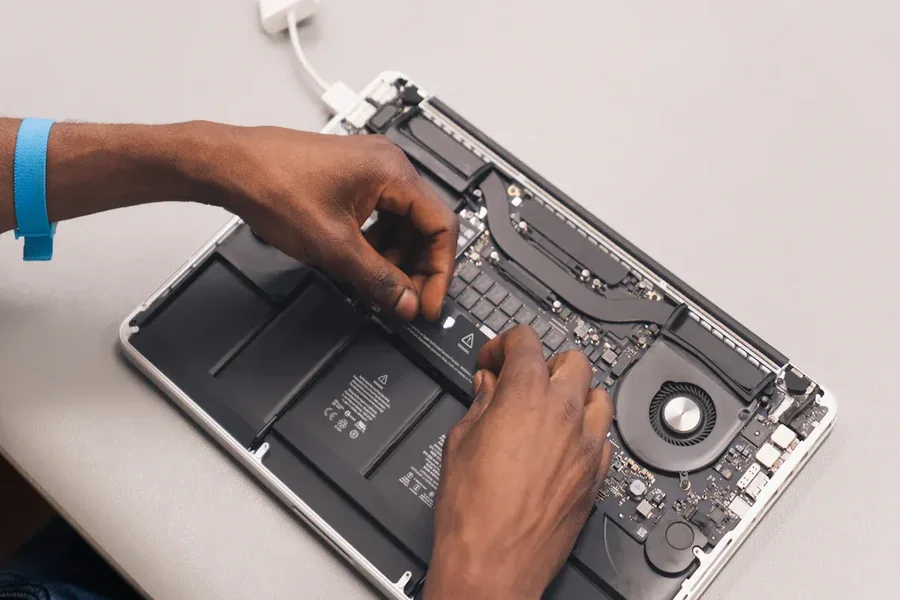
When you have spotted some weird bright or dark spots on your screen, you are likely to have a question How To Fix Pressure Spots On LCD Screen. They are annoying to have to deal with, particularly when it disrupts your experience on a phone, laptop, or monitor.
The pressure spots tend to be visible when the LCD display is strained. This may occur due to overloading the screen, sealing a laptop when there is an item inside or even simply not handling the laptop in the course of cleaning. The outcome is the lack of uniform light distribution that manifests itself as splashes or dark spots.
What should be realized though is not every pressure spot can be fixed forever. There are those that can be fixed using simple techniques and those that might need a professional to fix. Here, you will get to know the causes of these spots, how they can be managed safely, and how to avoid them in future.
What Are the Causes of Pressure Spots on LCD Screens
The pressure spots are the result of the disturbance of the layers of the LCD panel.
An LCD display consists of several thin layers such as liquid crystals, backlight and protective glass or plastic. These layers may move a bit when pressure is applied resulting in uneven light distribution.
Most frequently, it happens with pressing the screen excessively during the cleaning process, with putting heavy objects on the devices, or with putting a laptop in a bag full of objects.
Small, repeated pressure, such as pressing too hard to a touchscreen, can cause spots to appear over time.
It may sometimes be caused by heat and manufacturing defects, but the most common cause is physical pressure.
Knowing the cause is going to make you know whether you can improve the issue or not or it is permanent.
Screen Spots that You may encounter
Screen spots are not all equal, and establishing their type can be used to inform your subsequent actions.
Bright spots tend to be characterized by the lighter parts on a dark background. They are usually as a result of pressure on the diffusion of the backlight.
Dark spots, however, can be pointing towards more severe damage to the liquid crystal layer.
There may also be clouding or uneven brightness, particularly on the bigger screens such as TVs or monitors.
There are situations when the spot varies slightly upon pressing around, which means that the layers remain rather flexible.
Being informed of the difference assists you to make a decision whether a soft fix could be applicable.
The Best Method to correct Pressure Spots on LCD Screen
Always switch off and remove the plug of the device before trying to fix it. This minimizes chances of additional damages.
Gentle massaging is one of the least complicated techniques. Take a soft microfiber cloth and rub the area of the affected part in small circular actions. This may occasionally be useful in redistributing the layers or liquid crystals.
The other method is to exert only a small and controlled pressure on the spot and not on the spot itself. This can assist the layers to fall back in place.
Other users experiment with the so-called pixel massage technique, whereby the area is tapped or pressed very lightly. This must however be done with a lot of care.
These techniques can minimise the visibility of the spot in case it is minor. Nevertheless, do not put excessive pressure because it will aggravate the issue.
Patience is important. Little changes can occur in a slow way and not immediately.
When DIY Repairs Fail
Not every pressure spot is something which can be repaired at home.
In the case when the internal layers are damaged eternally, no external manipulations will be able to fully restore the screen.
Big black spots or ones which do not change at all are often indicators of more severe damage.
In these situations, the replacement of the screen or the whole display panel is the only actual resolution.
When it comes to gadgets such as smartphones or laptops, professional services will be able to change the screen and the price will be cheaper than purchasing a new gadget in most instances.
One should know when to give up on the DIY techniques to prevent worsening the problem.
Prevention of Pressure Spots in the Future
It is always easier to prevent pressure spots than to fix them.
This is because you should be careful when handling your devices and do not press them on the screen.
Light pressure and soft microfiber cloth should be used in cleaning. Hard or rough materials should be avoided.
Never put heavy items on top of laptops, tablets and monitors.
When you have a laptop, make sure that you have a padded bag to cushion the laptop against pressure during the transportation.
Do not leave your laptop on the table with such objects as pens or cables on the keyboard as this may flatten the screen.
By remembering such habits, the risk of harm can be greatly minimized.
What to do when it is time to replace the screen
In some cases, the most viable option would be replacement.
In case the point of pressure disrupts your everyday activity, e.g., video watching or work, it can be a good idea to change the screen.
Electronics with warranty can be repaired or changed based on the nature of the damage.
In the case of the older devices, weigh the cost of repair and the value of the device and then decide.
Professional technicians will be able to determine whether the problem can be repaired or it will need replacing.
It can save time and money to make an informed decision.
Final Thought
LCD screens are sensitive to pressure, and it can be a bother, yet it is usually avoidable, and in some cases, it is controllable. Knowing how to repair pressure spots on LCD screen will make you aware of what is within your reach at home.
Whereas small spots can be treated by simple methods, serious cases can be treated by professional intervention. The point is that it is necessary to be cautious and not to cause the situation to worsen.
With proper management of your devices and taking easy preventative measures, you will be able to maintain clean screens and working devices over a long period of time.
FAQs
How to fix pressure spots on LCD screen at home?
You can try gently massaging the area with a soft cloth to help redistribute the internal layers.
Are pressure spots permanent?
Some are temporary, but others can be permanent depending on the level of damage.
Can pressing the screen fix the spot?
Light pressure may help in minor cases, but too much pressure can worsen the damage.
Do pressure spots spread over time?
They usually do not spread, but additional pressure can create new spots.
Is it expensive to repair an LCD screen?
The cost varies depending on the device, but it is often cheaper than replacing the entire device.
Can screen protectors prevent pressure spots?
They can offer minor protection, but they cannot fully prevent pressure-related damage.
