
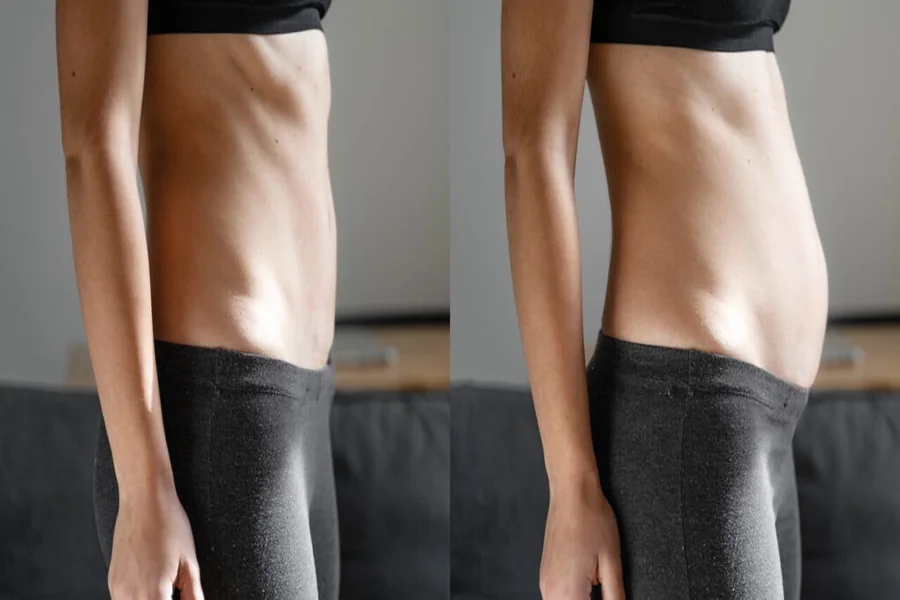
Diastasis recti is an outcome that is easily observed once one has given birth, but it may also occur in men and anyone who experiences an increase in abdominal pressure. How Long Does It Take To Fix Diastasis Recti cannot be answered in one-size-fits-all. The process of healing is dependent on your body, the level of separation and how you approach the healing process.
In certain individuals, the improvement may be observed in a few weeks, whereas in others, it may take months or even years. The trick is that one should know about the process of healing and adhere to the appropriate strategies. You will discover in this guide the real timelines, conditions that affect the recovery and how to take care of your body in a safe way.
What Is Diastasis Recti and Why It Occurs
Diastasis recti is a condition whereby the muscles of the abdomen known as the rectus abdominis muscles (the six-pack) part at the center of the abdomen. This occurs when the linea alba connective tissue is strained by pressure.
The most frequent cause is pregnancy since the swelling uterus causes pressure to the abdominal wall. Nonetheless, it may also occur due to inappropriate workout, heavy lifting or excessive weight gain.
You may find that you have a small protrusion in your stomach particularly when you sit up or strain. Other individuals also suffer lower back pain, bad posture or weak core.
Of importance is the understanding of the root cause since the healing process is not solely about time but also includes restoring the strength and pressure on the core.
Diastasis Recti Repair Time
The chronology is subject to change based on a number of factors, although the following is a rough outline:
With correct exercises and care, mild cases (1-2 finger separation) may begin to improve after approximately 6 to 8 weeks of exercise. The progress recorded within 2 to 3 months by many people is great.
The moderate cases (2-3 fingers separation) can require approximately 3-6 months to heal. It is important that it is consistent with the targeted core exercises at this stage.
The severe cases (3+ fingers separation) may require up to 6 months up to a year or longer. In certain cases particularly where there is no improvement, medical intervention may come into play.
One should keep in mind that fixing does not necessarily mean closing the gap all the way. Instead, it aims at restoring the functional, strength and tension of the abdominal wall.
Influencing Factors on recovery time
All people do not heal likewise. The rate of recovery after diastasis recti can be affected by a number of factors.
Consistency is one of the major factors. It helps a lot to do the right exercises regularly. Missing of workouts or performing wrong movements can slow down.
It is also dependent on your general health and fitness level. Faster recovery is usually caused by stronger muscles and a sense of being better aware of the body.
Surprisingly, posture and everyday practices are important. Misalignment, poor lifting or holding breath during the activity may exacerbate the situation.
Connective tissues have the ability to regain strength faster or slower depending on hormonal changes, particularly after pregnancy.
Finally, the intensity of the separation during the initial time will also have a natural effect on the time of recovery.
Most effective Exercises to Accelerate Recovery
There is no healing of diastasis recti involved in intense workouts. Actually, even conventional ab exercises such as crunches or sit-ups might only make it worse.
Rather, concentrate on slow, non-violent movements that can build the deep core muscles.
Exercises of breathing are an excellent beginning. Training to use your transverse abdominis (deep core muscle) in abdominal wall support.
Pelvic tilts are not complicated but effective. They assist in the activation of lower abdominal muscles without any strain.
Heel slides and leg lifts (when done properly) may help build strength slowly provided that there is low pressure.
When you get further ahead you can add modified planks or core work using resistance, but that is only when your body is prepared.
It is all about quality rather than quantity. It is much more effective to do slow and controlled movements rather than to hurry through exercises.
What Not to do in the Recovery
A lot of individuals fail to heal on time because of engaging in bad things.
Exercises that will make your abdomen protrude should be avoided. These involve crunches, sit-ups and some types of planking unless performed properly.
Lifting heavy without the engagement of the core may add pressure to the abdomen and aggravate the separation.
Be careful of motions which are twisting or abrupt, particularly at the beginning of recovery.
Habits even in day to day count. Leaving the bed in the wrong way (such as sit-up movement) may put a strain on the core. Rather roll on your side and pull yourself up.
These are some of the most common mistakes that you can avoid to ensure that you safeguard your progress and recover faster.
When Professional Help is to be taken into consideration
When you have been doing exercises over a few months and you do not find any change or minimal change then it may be time to get professional assistance.
To determine your condition and develop a personal recovery plan, a physiotherapist or a postpartum fitness specialist can evaluate your condition.
They are also in a position to make sure that you are doing exercises properly and this is the difference between improvement and disappointment.
In extreme situations when the separation is painful or problematic in terms of functionality, surgery can be an option. This is however, the last resort after the non-invasive methods have been exhausted.
By consulting the professionals in their early years, you can save time and prevent failures.
Final Thought
The cure of diastasis recti is a long process, a regular routine, and a proper method. Though it is normal to ask how long it takes, it would be a mistake to concentrate on time alone. The only thing that is important is how you are supportive of your body in the healing process.
Many individuals are getting meaningful improvement in a few months with the help of proper exercises, good habits, and realistic expectations. Although the gap may not be entirely removed, getting back on your feet and regaining some normalcy can help considerably to make your life better.
Be consistent, listen to your body and keep in mind that slow progress is progress.
FAQs
How long does it take to fix diastasis recti completely?
It can take anywhere from a few months to a year, depending on the severity and consistency of treatment.
Can diastasis recti heal on its own?
Mild cases may improve naturally, but targeted exercises are usually needed for proper healing.
Is it too late to fix diastasis recti years after pregnancy?
No, it’s never too late, and many people successfully improve their condition even years later.
What is the fastest way to heal diastasis recti?
The fastest way is consistent deep core exercises, proper breathing techniques, and avoiding harmful movements.
Can I work out with diastasis recti?
Yes, but you need to follow safe, core-friendly exercises and avoid high-pressure movements.
Do I need surgery to fix diastasis recti?
Most people do not need surgery, and it is usually only considered in severe cases with functional problems.
