
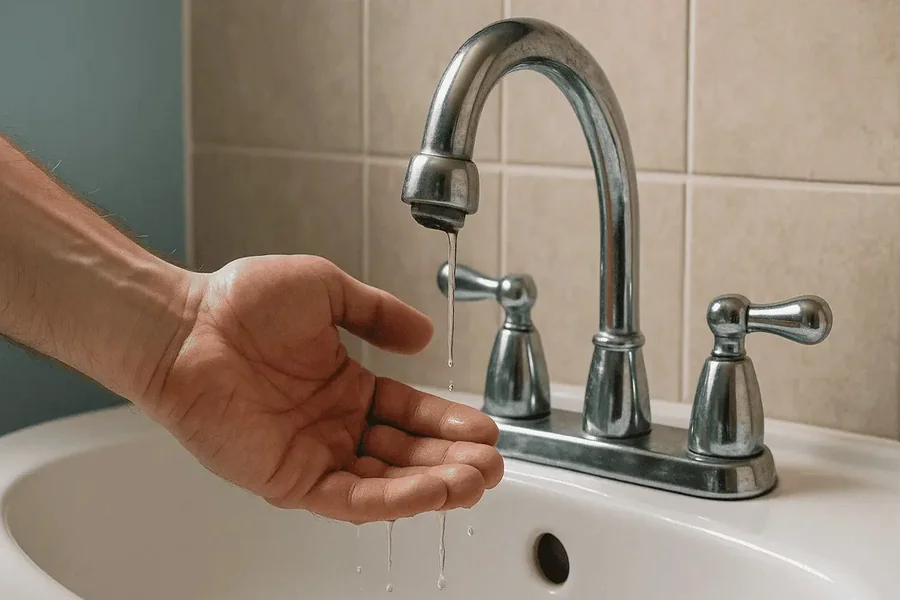
Water pressure in your bathroom sink is annoying, more so when it takes less time to complete your daily routine. When you are trying to find out How To Fix Water Pressure In Bathroom Sink, it is most likely that you have a weak flow of water, uneven water supply, or the lack of pressure.
The silver lining is that such a problem is normally occasioned by minor problems such as blockages, accumulation or tiny plumbing malfunctions. You simply can fix it, most of the time, without the help of a plumber. The first step to recovering the adequate water flow is to understand the cause.
You will discover in this guide the usual causes of low sink pressure, step by step solutions and some tips that you can use to make sure your plumbing is running effectively.
Usual Reasons of Low water pressure
It is necessary to know what could be leading to the problem before correcting the problem.
One of the most common reasons is a clogged aerator. The small screen at the tip of your faucet is called the aerator and may accumulate debris, mineral deposits and dirt with time.
The other similar reason is that of mineral deposition within the pipes particularly those in hard water regions. This is capable of limiting water flow over time.
Water leakages through the plumbing system also may decrease pressure since the water will leak out before reaching the faucet.
The sink may have faulty shut-off valves (or half-open shut-off valves) that restrict the flow of water.
The problem might not always be on your sink only. Main water supply or pressure regulator issues may impact various fixtures at home.
It is important to determine the specific cause so that you can use the appropriate solution.
How to repair the water pressure in the sink of the bathroom step by step
Resolving the problem of low water pressure is not always difficult.
Begin by making sure the aerator is checked. Loosen it off the faucet and examine it to determine that there is no debris or deposits. Wipe it with brushes and water.
Then switch on the faucet without aerator and check whether there is an improvement in the pressure. In the event that it was, then the aerator was the primary problem.
Check under sink shut-off valves. Ensure they are completely open so that as much water can pass in them.
In case, there are low pressure levels check the supply lines against any kink or blockage.
You are also able to do hot and cold water individually to see whether the problem is on one side or both.
These few steps will help to find and address the issue in a short time.
Washing Aerator and Faucet
The most convenient usually is the place to begin with and that is the aerator.
Once it is removed, wash it in vinegar 15 to 30 minutes. This aids in dissolving deposits and accumulation of minerals.
Clean the small holes in the screen using a small brush or tooth pick.
Wash it with a lot of water and then refit it to the faucet.
During the removal of the aerator, momentarily turn the water on, flushing anything out of the faucet.
The frequent cleaning can avoid the problem of pressure recurrence.
Inspection of Pipes and Valves
In case the cleaning of the aerator does not resolve the problem, one should examine the plumbing parts as the next measure.
Check the tapered valves beneath the sink. Rotate them in anti-clockwise direction in order to open them completely.
Check on the water supply lines, whether they are bent, leaked or blocked. Broken lines can be required to be replaced.
In case it is only the hot or cold water, it might be a problem within the cartridge of the faucet or a given pipe.
Older houses may also contain internal accumulation of pipes that slow down the amount of water passing through them.
A close examination of these elements will expose concealed issues.
Dealing With Mineral Accretion
The presence of mineral deposits is a widespread problem, and its presence is noticeable in hard-water regions.
In the long run, minerals such as calcium and lime may build up within the pipes and fixtures and slow down the flow of water.
It is possible to remove the accumulations of the accessible parts such as aerators and faucet heads using vinegar or descaling solution.
In the event of heavier accumulation in pipes, cleaning by the pipe upkeep specialist or replacement might be required.
To avoid accumulation in the future, it would be possible to install a water softener and ensure the water pressure is maintained.
Remediation of mineral deposits enhances the flow and the quality of water.
How to know when to call a plumber
Most of the fixes can be done in the home but there are cases when it is necessary to seek professional assistance.
In case you have tried all the simple solutions and the pressure remains low, the plumbing system can have a more serious problem.
A licensed plumber should be able to deal with persistent leaks, damaged pipes, or issues with the main water line.
When several of the fixtures in your home run poorly, it can be either the problem with the overall supply of water or pressure regulator.
A specialist is able to identify complicated problems, as well as offer solutions that are long-term.
It is better to know when you have to ask somebody else to save time and do not make the situation worse.
Final Thought
Poor water pressure in your bathroom sink is a lot of irritation but can be easily resolved by undertaking some basic measures. Knowing how to adjust the water pressure in bathroom sinks provides the skills necessary to deal with the normal problems without panic.
Small tasks such as cleaning the aerator, valve checking, and handling of mineral build up may add up to a lot. Your plumbing system can be maintained and taken care of regularly to avoid the future problems.
Having the correct solution, you will be able to reinstate good reliable water flow and have your sink running smoothly on a daily basis.
FAQs
How to fix water pressure in bathroom sink quickly?
Start by cleaning the aerator and checking if the shut-off valves are fully open.
Why is my bathroom sink water pressure low only on one side?
It may be due to a clogged pipe or issue with either the hot or cold water line.
Can a clogged aerator cause low water pressure?
Yes, it is one of the most common causes of reduced water flow.
How often should I clean my faucet aerator?
It is recommended to clean it every few months to prevent buildup.
Is low water pressure a serious problem?
It can be minor, but persistent issues may indicate underlying plumbing problems.
Do I need a plumber to fix low sink pressure?
Most minor issues can be fixed at home, but complex problems may require professional help.
